
Slab vs Pier and Beam Foundations: What New Braunfels Homeowners Need to Know
If you’re dealing with foundation problems in New Braunfels, the first thing you need to know is which type of foundation your home has. The answer determines how the foundation fails, how it’s repaired, and what maintenance it needs.
What Is a Slab Foundation?
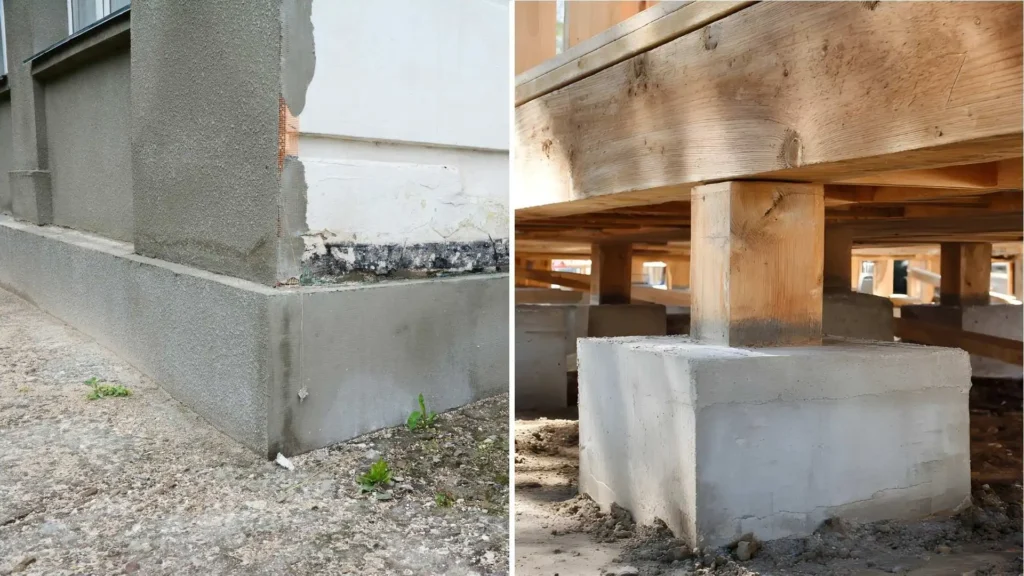
A slab foundation (also called slab-on-grade) is a single layer of concrete poured directly on the ground. The outer edges are thicker (24 to 36 inches deep) to form perimeter beams, and interior beams crisscross beneath the slab in a waffle or ribbed pattern. The slab sits directly on the soil with no space between the ground and the floor.
Most New Braunfels homes built after 1960 have slab foundations. This includes virtually all of the newer subdivisions: Veramendi, Voss Farms, the I-35 corridor communities, and most of the growth that has made New Braunfels one of the fastest-growing cities in Texas.
What Is a Pier and Beam Foundation?
A pier and beam foundation (also called post and beam or crawl space foundation) elevates the home above the ground on a system of vertical piers and horizontal beams. Wooden joists span across the beams to support the floor. The crawl space between the ground and the floor is typically 18 to 24 inches high.
Pier and beam foundations are found in older New Braunfels homes, particularly near downtown, the Gruene historic district, and along the Guadalupe River corridor. Most Texas homes built before the 1960s used pier and beam construction. If your home has a crawl space you can access through a hatch or vent, you have a pier and beam foundation.
How Each Foundation Fails in New Braunfels
Slab failures are driven by soil movement. The expansive clay beneath the slab swells when wet and shrinks when dry. This creates three patterns: settlement (the slab sinks into voids left by shrinking soil), heaving (expanding soil pushes the slab upward), and differential movement (one section settles while another heaves). The result is cracking, uneven floors, and stuck doors.
Pier and beam failures involve both soil and wood. The piers (concrete blocks or wooden posts) can settle or shift as the soil moves, just like a slab. But the wooden beams and joists can also deteriorate from moisture damage, termite damage, and rot. Crawl space humidity, standing water, and poor ventilation accelerate wood deterioration. In older New Braunfels homes near the Guadalupe River, where water tables are higher, crawl space moisture problems are especially common.
How Repair Differs
|
Factor |
Slab Repair |
Pier and Beam Repair |
|---|---|---|
|
Primary method |
Steel or concrete piers driven to stable soil through the clay |
Pier replacement, beam reinforcement, shimming |
|
Access |
Exterior of the home (piers installed along the foundation perimeter) |
Crawl space (repair happens beneath the home) |
|
Additional work |
Drainage correction, sometimes plumbing inspection |
Crawl space moisture management, vapor barrier, ventilation |
|
Typical cost |
$2,000 – $15,000+ |
$1,000 – $15,000+ |
|
Timeline |
1-3 days typical |
1-5 days depending on scope |
|
Warranty |
Typically lifetime transferable on pier installations |
Varies by component (piers, beams, moisture work) |
Which Is Better?
Neither is inherently better. Each has advantages for specific situations.
Slab advantages: Lower construction cost, no crawl space moisture management needed, simpler structure, works well on flat terrain.
Slab disadvantages: Plumbing runs beneath the slab and is difficult to access for repairs. No crawl space access for inspection or modification. Sits directly on problem soil.
Pier and beam advantages: Accessible crawl space for plumbing, electrical, and inspection. Can be adjusted and re-leveled more easily than a slab. Elevates the home above ground moisture.
Pier and beam disadvantages: Wooden components are susceptible to rot, termites, and moisture damage. Requires ongoing crawl space maintenance. Higher long-term maintenance cost.
In New Braunfels, both foundation types perform well when properly built and maintained. The key is understanding which type you have and what maintenance it requires in this soil environment.
How to Tell Which Foundation You Have
- If there is no space beneath your home and the floor sits directly on concrete, you have a slab foundation.
- If there is a crawl space you can access through a hatch or vent opening, you have a pier and beam foundation.
- If you’re unsure, look for exterior vents near the ground level. Pier and beam homes typically have ventilation openings along the foundation perimeter. Slab homes do not.
If you’re experiencing foundation symptoms and aren’t sure which type you have, a free inspection identifies your foundation type and assesses its condition.
Schedule a Free Foundation Inspection
Frequently Asked Questions
Can a pier and beam foundation be converted to a slab?
Technically yes, but it’s rarely practical. The conversion requires lifting the entire structure, removing the existing foundation, grading the site, and pouring a new slab. In most cases, repairing and maintaining the pier and beam system costs significantly less.
Which foundation type is more common in New Braunfels?
Slab foundations are far more common in modern New Braunfels. Nearly all homes built after 1960 use slab-on-grade construction. Pier and beam foundations are found primarily in older homes near downtown, Gruene, and along the Guadalupe River corridor.
Are pier and beam homes harder to sell?
Not inherently. Many buyers prefer pier and beam homes for the accessibility and character of older construction. However, a pier and beam home with a poorly maintained crawl space or visible foundation symptoms will face the same buyer concerns as a slab home with cracks and uneven floors. A pre-sale inspection and any needed repairs remove this as a concern.
Do I need different maintenance for each foundation type?
Yes. Slab foundations primarily need drainage management: keeping water away from the perimeter and maintaining consistent soil moisture during drought. Pier and beam foundations need both drainage management and crawl space maintenance: moisture control, ventilation, pest monitoring, and periodic inspection of the wooden structural components.
Which foundation is more expensive to repair?
It depends on the damage. Minor pier and beam repairs (shimming, re-leveling) can be less expensive than slab pier installation. Major pier and beam work (full beam replacement, crawl space encapsulation) can match or exceed the cost of a major slab repair. The total cost depends on the scope of work, not the foundation type.