Foundation Crack Repair in New Braunfels
Comal Foundation Repair offers free crack assessments for homeowners throughout New Braunfels and Comal County. We’ll evaluate your cracks, determine whether they’re cosmetic or structural, and recommend the appropriate course of action, even if that action is simply monitoring.
Request A Free Estimate
When Foundation Cracks Require Repair
Not every crack in your foundation means you need a major repair. But some cracks absolutely do. The challenge for homeowners is telling the difference. A hairline vertical crack in a two-year-old home is probably normal settling. A horizontal crack running across a basement or retaining wall is a structural emergency. Most situations fall somewhere between these extremes, which is why a professional assessment matters. In New Braunfels, foundation cracks are common because the expansive clay soils beneath homes create constant movement. The seasonal cycle of drought and heavy rain that characterizes the Hill Country climate means foundations in this area are under stress year-round. Understanding the type, direction, and width of a crack can tell you a lot about what’s happening beneath your home.
Types of Foundation Cracks and What They Mean
Vertical cracks. Cracks that run straight up and down (or within 30 degrees of vertical) are the most common and usually the least serious. They typically result from concrete curing shrinkage or minor settlement. In newer New Braunfels homes, vertical hairline cracks in the first 2-3 years are expected as the foundation adjusts to the soil. These cracks are usually cosmetic and can be sealed with flexible caulk to prevent water infiltration.
Horizontal cracks. Cracks that run sideways across the foundation wall are serious. They indicate lateral pressure from the soil pushing inward against the foundation. In the New Braunfels area, horizontal cracking is most often caused by saturated clay soils expanding against the foundation wall after heavy rain events, particularly following an extended dry period when the soil swells rapidly. Horizontal cracks require professional assessment because they indicate the foundation wall is being stressed beyond its design capacity.
Diagonal cracks. Cracks that run at a 45-degree angle typically indicate differential settlement, meaning one part of the foundation is moving while an adjacent part is not. Diagonal cracks near corners of windows and doors are classic signs of active foundation movement. In New Braunfels, diagonal cracking is often the first visible sign that the soil beneath one side of the home has either dried out and settled or become saturated and heaved.
Stair-step cracks. These follow the mortar joints in brick or block walls in a stepping pattern. Stair-step cracks indicate the wall is moving as a unit due to foundation settlement beneath it. They are structural and should be assessed promptly. The pattern of the stair-step (whether it rises to the left or right, and from which corner) can tell an experienced inspector exactly which section of the foundation is moving and in which direction.
Crack width matters. Hairline cracks (less than 1/16 inch) are generally cosmetic. Cracks between 1/16 and 1/4 inch should be monitored. Cracks wider than 1/4 inch, or cracks that are wider at one end than the other, indicate active movement and should be inspected by a professional. A crack that’s wider at the top than the bottom typically indicates the foundation is settling on that side. A crack wider at the bottom suggests heaving.
Foundation Crack Repair Methods
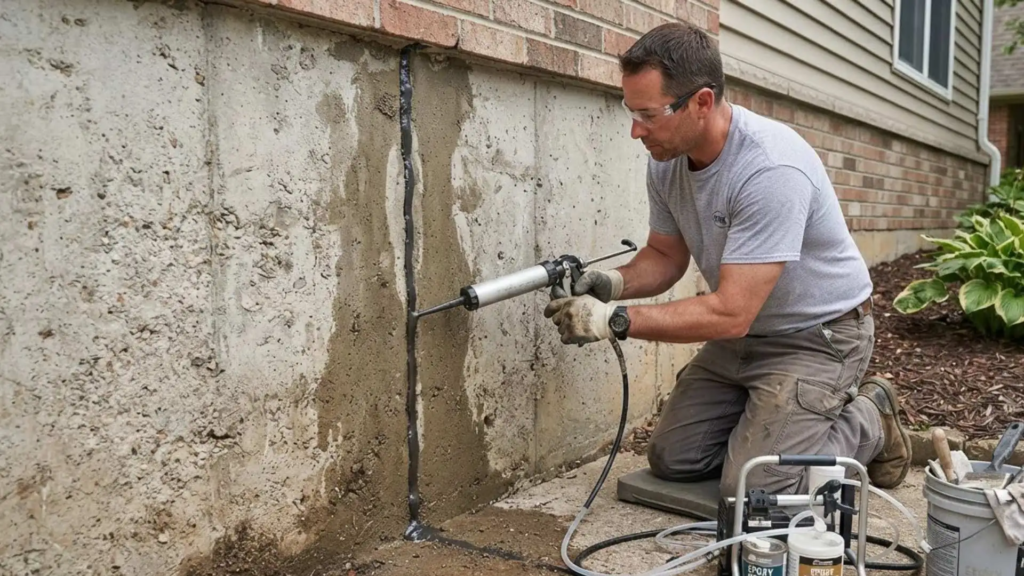
Epoxy injection. Structural-grade epoxy is injected into the crack under low pressure, bonding the concrete back together and restoring its load-bearing capacity. Epoxy injection is used for structural cracks in poured concrete foundations where the crack is stable (not actively widening). The epoxy creates a bond that is stronger than the surrounding concrete. Cost is typically $250 to $800 per crack depending on length and depth.
Polyurethane foam injection. Flexible polyurethane foam is injected into the crack to seal it against water infiltration. Unlike epoxy, polyurethane remains flexible after curing, which makes it better suited for cracks in foundations that may still experience minor movement. This is primarily a waterproofing and sealing solution rather than a structural repair. Cost is similar to epoxy, typically $200 to $600 per crack.
Carbon fiber reinforcement. For horizontal cracks caused by lateral soil pressure, carbon fiber straps are bonded to the interior of the foundation wall using industrial-grade epoxy. These straps resist further inward movement and stabilize the wall without the need for excavation or wall replacement. Carbon fiber is extremely strong (stronger per weight than steel), thin enough not to affect usable space, and requires no ongoing maintenance. This is a common solution in the New Braunfels area for block and poured wall foundations experiencing pressure from expanding clay. Cost typically ranges from $500 to $1,000 per strap installed.
Steel reinforcement plates. For severe horizontal cracking or bowing walls, steel plates or I-beams are anchored to the foundation wall and bolted to the floor and ceiling structure. This is a more aggressive intervention than carbon fiber and is used when the wall has moved significantly beyond its original position. Cost varies significantly based on the severity and extent of the wall damage.
Pier installation for active settlement. When cracks are caused by active settlement rather than surface-level concrete issues, the underlying cause needs to be addressed. Installing piers beneath the settling section of the foundation stabilizes the soil support and prevents further movement. This stops new cracks from forming and may close existing ones as the foundation is lifted back toward its original position.
When to Worry About Foundation Cracks
Probably cosmetic (monitor):
- Vertical hairline cracks in homes less than 3 years old
- Single small cracks with no accompanying symptoms (doors work fine, floors are level)
- Cracks that haven’t changed in size over several months
- Cracks that appeared during the home’s first summer as the soil dried (common in New Braunfels new construction)
Schedule an inspection:
- Any horizontal crack, regardless of width
- Diagonal cracks near doors or windows
- Stair-step cracks in exterior brick
- Cracks wider than 1/4 inch
- Cracks that are wider at one end than the other
- Multiple cracks accompanied by sticking doors, uneven floors, or gaps at wall junctions
- Cracks that have visibly grown since you first noticed them
- Water seeping through a foundation crack after rain
A free crack assessment determines whether your cracks are cosmetic or structural and what, if anything, needs to be done.
What Foundation Crack Repair Costs
| Repair Type | Typical Cost Range |
|---|---|
| Epoxy injection (per crack) | $250 – $800 |
| Polyurethane foam injection (per crack) | $200 – $600 |
| Carbon fiber strap (per strap) | $500 – $1,000 |
| Steel reinforcement (per wall section) | $2,000 – $5,000+ |
| Pier installation (for settlement-caused cracks) | $4,000 – $12,000+ |
Frequently Asked Questions
Can I fix foundation cracks myself?
For cosmetic hairline cracks, DIY patching with flexible caulk or hydraulic cement is a reasonable temporary solution to prevent water infiltration. However, any crack that may be structural (horizontal, diagonal, stair-step, or wider than 1/4 inch) should be evaluated by a professional before attempting repair. Patching a structural crack without addressing the underlying cause masks the problem and allows it to worsen.
Do foundation cracks always mean foundation failure?
No. Many foundation cracks are cosmetic, caused by normal concrete curing shrinkage or minor settling that doesn’t affect structural integrity. The type, direction, width, and pattern of cracking determine whether a crack is cosmetic or structural. A professional assessment separates the two.
Will foundation cracks get worse over time?
Structural cracks caused by active soil movement will generally worsen if the underlying cause is not addressed. The soil movement that caused the initial crack continues, widening the existing crack and potentially creating new ones. Cosmetic cracks typically stabilize and don’t worsen.
How long does crack repair take?
Epoxy and polyurethane injection repairs are typically completed in a few hours. Carbon fiber strap installation takes one day for most walls. Pier installation for settlement-caused cracking takes 1 to 3 days depending on the number of piers required.
Should I repair cracks before selling my home?
Texas law requires disclosure of known foundation issues to buyers. Unrepaired structural cracks can reduce your sale price, trigger buyer inspection concerns, and cause deals to fall through. Getting a professional assessment and repairing structural cracks before listing generally leads to a smoother transaction.
Get a Free Foundation Crack Assessment
If you’ve noticed cracks in your walls, floors, or foundation and aren’t sure whether they’re cosmetic or structural, a free assessment gives you a clear answer. We’ll evaluate the cracks, explain what’s causing them, and recommend the right course of action for your situation. Comal Foundation Repair serves all of New Braunfels and surrounding Comal County communities.