Slab Foundation Repair in New Braunfels
Most homes in New Braunfels are built on concrete slab foundations. A slab foundation is a single layer of concrete, typically 4 to 6 inches thick, poured directly on the ground. The outer edges are thicker (24 to 36 inches deep) to form perimeter beams, and interior beams crisscross beneath the slab in a waffle-like pattern to distribute the weight of the structure. This design is efficient and cost-effective, but it has a vulnerability: it sits directly on the soil. In New Braunfels, that soil is expansive clay, the kind that swells when it absorbs moisture and shrinks when it dries out. That constant cycle of expansion and contraction pushes, pulls, and shifts the slab over time. Comal Foundation Repair provides free slab foundation inspections for homeowners throughout New Braunfels and Comal County. If your slab has settled, cracked, or shifted, we’ll identify the cause and explain exactly what it takes to fix it.
Request A Free Estimate
How Slab Foundations Fail in New Braunfels
Slab foundation damage in New Braunfels typically follows one of three patterns:
Settlement. When clay soils dry out and shrink during extended dry periods, the soil volume decreases and the foundation loses support. The slab settles into the void. This is especially common on the eastern side of New Braunfels where Blackland Prairie clay deposits run deep and hold significant moisture that evaporates during summer droughts.
Heaving. When saturated clay soils expand, they push upward against the slab. Heaving is the opposite of settlement and is often triggered by heavy rains following a drought, plumbing leaks beneath the slab, or poor drainage that concentrates moisture against one side of the foundation. In Comal County, heaving events are most frequent in the fall when the first significant rains hit soil that has been baking since June.
Differential movement. This is the most damaging pattern. One section of the foundation settles while another section heaves or remains stable. The resulting tilt or twist creates the cracks, stuck doors, and uneven floors that homeowners notice first. Differential movement is especially common in neighborhoods that sit across the transition zone between the Edwards Plateau limestone and Blackland Prairie clay formations, where soil composition can change significantly within a single property.
The western neighborhoods of New Braunfels, built on Edwards Plateau geology, tend to see faster soil responses because the clay layer above the limestone bedrock is thinner. Moisture changes affect the full clay depth more quickly, leading to rapid expansion and contraction cycles. In contrast, the deeper clay deposits on the eastern side create slower but more severe long-term settlement because there is more soil volume involved in the movement.
Slab Foundation Repair Methods
The right repair method depends on what’s happening beneath your slab. Here are the primary approaches used in the New Braunfels area:
Steel piers. Steel piers are driven through the unstable clay layer down to load-bearing soil or bedrock. In western New Braunfels, this often means reaching the limestone formations of the Edwards Plateau at depths of 12 feet or less. In eastern areas with deeper clay, steel piers may need to reach 15 to 22 feet to find stable ground. Steel piers are the most durable solution for slab foundations on expansive clay because they bypass the problem soil entirely and anchor to stable ground. They use the weight of the structure to drive the pier, and once installed, they provide permanent support regardless of what the soil above does. Typical cost per pier ranges from $500 to $800 installed.
Pressed concrete piers. Concrete cylinders (approximately 6 inches in diameter and 8 to 10 inches long) are hydraulically pressed into the soil beneath the foundation beam, one on top of another, until they reach the point of refusal, the point where the soil resistance equals the weight of the structure. Pressed concrete piers are more affordable than steel piers (typically $250 to $400 per pier installed) and are effective for moderate settlement. They rely on friction and soil resistance rather than reaching bedrock, which means they work best when the settlement is caused by localized soil voids rather than deep, widespread soil failure.
Helical piers. Steel shafts with screw-like blades are twisted into the ground to a predetermined depth and torque specification. Helical piers are useful when the weight of the structure alone isn’t sufficient to drive a push pier, or when the soil conditions require a specific anchoring approach. They’re also used in situations where vibration from driving push piers would be problematic, such as near pools or retaining walls. Helical piers typically cost $1,000 to $1,500 per pier installed.
Polyurethane foam injection. A two-part polyurethane foam is injected through small holes (about the size of a penny) drilled in the slab. The foam expands beneath the concrete, fills voids, compresses loose soil, and lifts the slab. Polyurethane cures in minutes and is ready for use the same day. This method is typically used for minor settlement where voids beneath the slab are the primary issue. Polyurethane is lightweight (about 4 pounds per cubic foot), won’t wash out like organic fill material, and doesn’t add significant weight to already unstable soil.
How the right method is determined. The repair method isn’t chosen by preference or price. It’s determined by the inspection findings: the depth and type of stable soil beneath the property, the severity and pattern of the settlement, the foundation’s structural condition, and the budget. A thorough inspection identifies which method provides the most reliable long-term result for your specific situation.
Signs Your Slab Foundation Needs Repair
These are the most common indicators of slab foundation distress in New Braunfels homes:
- Diagonal cracks in drywall near door and window frames
- Doors or windows that stick, jam, or swing open on their own
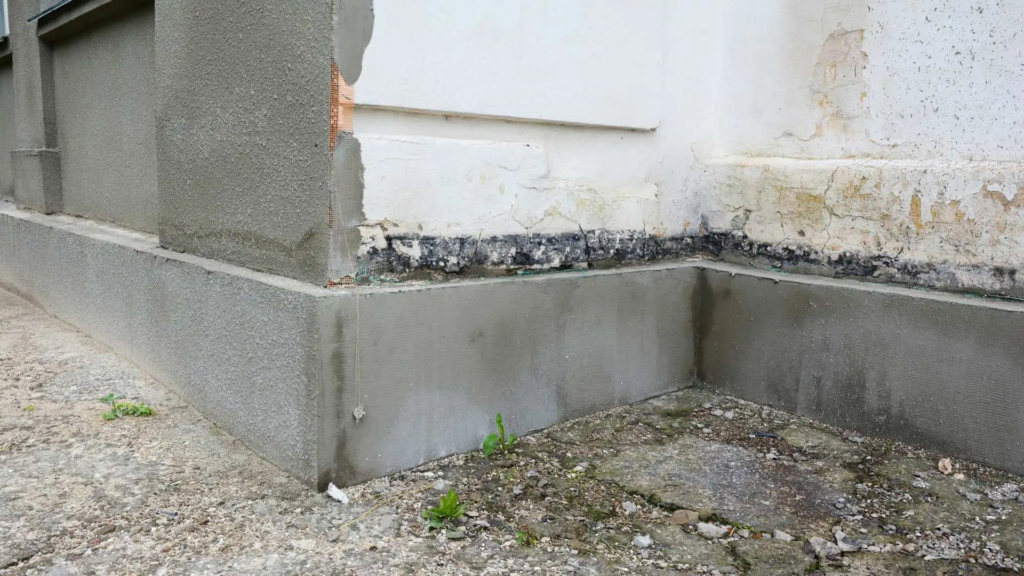
- Visible cracks in the exposed slab edge around the exterior of the home
- Floors that slope noticeably in one direction
- Tile or grout cracking in patterns that follow the slab beams beneath
- Gaps appearing between walls and ceiling or walls and floor
- Cracks in exterior brick following a stair-step pattern along the mortar joints
- Baseboards pulling away from the wall or floor
- Countertops or cabinets separating from the wall
- A visible gap between the soil and the foundation perimeter during dry weather (this is particularly common in New Braunfels during summer months when the clay shrinks away from the slab)
If you’ve noticed any combination of these symptoms, a free foundation inspection is the right first step. Not every crack means you need repair, but a professional assessment tells you exactly where you stand.
What Slab Foundation Repair Costs
Slab foundation repair costs in New Braunfels depend primarily on the number of piers required and the method used:
| Repair Type | Typical Cost Range |
|---|---|
| Polyurethane foam injection (minor leveling) | $500 – $2,000 |
| Pressed concrete piers (3–5 piers) | $2,000 – $4,000 |
| Steel piers (6–10 piers, standard repair) | $4,000 – $8,000 |
| Full-perimeter pier installation (10+ piers) | $8,000 – $15,000+ |
These ranges are estimates. The actual cost depends on your foundation’s condition, the depth piers need to reach, and the accessibility of the work area. A free inspection provides an accurate, written quote for your specific situation.
Frequently Asked Questions
How long does slab foundation repair take?
Most slab repairs are completed in 1 to 3 days. A typical 6-8 pier installation can often be finished in a single day. Larger projects with 10 or more piers may extend to 2-3 days depending on soil conditions and accessibility.
Will slab foundation repair damage my landscaping?
Some excavation is required at each pier location, typically a small area along the foundation perimeter. Landscaping in those spots will be disturbed, but the work areas are restored after installation. Interior work through the slab is minimal.
Is steel or concrete better for slab repair in New Braunfels?
Both methods work, but they serve different situations. Steel piers are preferred for more severe settlement because they reach deeper, more stable soil or bedrock. Pressed concrete piers are effective and more affordable for moderate settlement where the stable soil layer is closer to the surface. Your inspector will recommend the appropriate method based on your foundation’s condition and the soil depth at your property.
Can I stay in my home during slab repair?
Yes. Slab foundation repair is performed from the exterior of the home. You may hear hydraulic equipment and feel minor vibrations during pier driving, but the work does not require you to vacate. Furniture near the walls being repaired may need to be moved temporarily.
Does slab repair come with a warranty?
Reputable foundation repair contractors provide written warranties on their pier installations. Warranty terms vary by contractor and method, so ask about specific coverage during your free inspection and estimate.
Get a Free Slab Foundation Inspection
If you’re seeing signs of slab damage in your New Braunfels home, a free inspection is the fastest way to find out what’s happening and what it will take to fix it. No obligation, no pressure. Comal Foundation Repair serves all of New Braunfels and surrounding Comal County communities including San Marcos, Seguin, Schertz, Canyon Lake, Kyle, and Wimberley.