Signs Your Foundation Needs Repair
Not every crack means your foundation is failing. But some warning signs should not be ignored.
The challenge for homeowners is knowing the difference between cosmetic settling and real structural movement. This guide covers the most common signs of foundation damage, explains which ones are serious and which ones are probably fine, and helps you decide whether a professional inspection is the right next step.
If you live in New Braunfels or anywhere in Comal County, the expansive clay soils beneath your home make foundation movement more likely than in most parts of the country. Knowing what to look for means catching problems early, when repairs are simpler and less expensive.
Cracks in Interior Walls
Wall cracks are the most visible sign of foundation movement, but not all cracks are equal.
Diagonal cracks that start at the corner of a door or window frame and angle toward the ceiling are the most concerning. These typically indicate differential settlement, where one part of the foundation is moving while the rest stays in place. The crack follows the stress line created by the shifting frame.
Horizontal cracks in walls, especially at or near floor level, suggest lateral soil pressure pushing against the foundation wall from the outside. In New Braunfels, this happens when saturated clay soils expand after heavy rain and push inward.
Vertical hairline cracks in drywall are the least concerning. These often result from normal concrete curing or minor settling, especially in homes less than 3 years old. They’re cosmetic unless they widen over time or appear alongside other symptoms.
The key: one small crack by itself is rarely an emergency. Multiple cracks appearing in different locations, or cracks that are growing wider, indicate active foundation movement.
Doors and Windows That Stick or Won’t Close
When a foundation shifts, the door and window frames shift with it. Even a small amount of movement can pull a frame out of square, causing doors to stick, rub against the frame, swing open on their own, or refuse to latch. Windows that used to slide easily may suddenly require force.
If you’ve trimmed or planed a door to make it close properly, that’s a sign someone was already working around a foundation problem rather than addressing it. Interior doors are affected more often than exterior doors because they’re lighter and more sensitive to frame movement.
In New Braunfels, door and window problems are most common after seasonal transitions. A hot summer dries the clay soil, the foundation settles, and doors start sticking. When the fall rains come and the soil expands, some doors may start working again, but others may develop new problems as the foundation moves in the opposite direction.
Uneven or Sloping Floors
Place a ball on the floor. If it rolls consistently in one direction, your foundation may have settled unevenly.
Minor floor slopes (less than 1 inch over 15 to 20 feet) are common in Texas homes and don’t always indicate a serious problem. More significant slopes, especially when accompanied by cracks and door problems, suggest active differential settlement.
In slab homes, uneven floors usually mean one section of the slab has dropped relative to the rest. In pier and beam homes, uneven floors can result from pier shifting, beam deterioration, or joist damage in the crawl space.
Gaps Between Walls and Ceiling or Walls and Floor
Visible separation where walls meet the ceiling, or where walls meet the floor at the baseboard, indicates the structure is moving. These gaps develop because the wall and ceiling are attached to different structural elements that are moving at different rates.
Gaps that appear on one side of the house but not the other are a strong indicator of differential settlement. Check the corners of rooms and where additions meet the original structure, as these are the most common locations for separation.
Exterior Brick Cracks (Stair-Step Pattern)
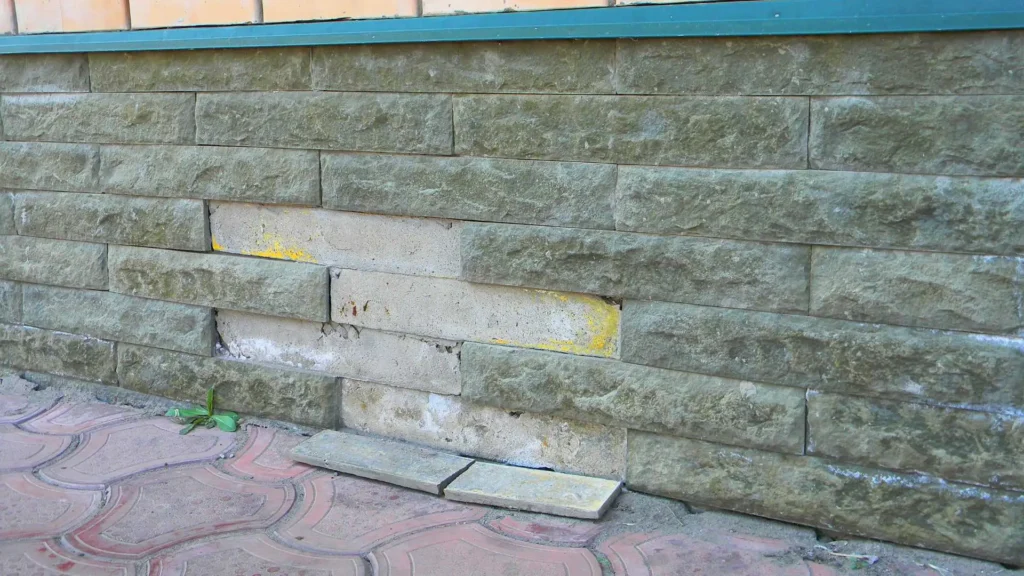
Stair-step cracks following the mortar joints in brick veneer are one of the most reliable indicators of foundation settlement. The crack follows the path of least resistance through the mortar rather than through the brick itself.
Stair-step cracks indicate that the wall is moving as a unit because the foundation beneath it is shifting. The direction and location of the crack can tell an experienced inspector which section of the foundation is settling and in which direction.
In New Braunfels, exterior brick cracks are particularly common on the south and west sides of homes, where sun exposure dries the soil faster and creates more pronounced settlement along those edges.
Gaps Between Soil and Foundation
During dry periods, walk around the exterior of your home and look at the base of the foundation. If there is a visible gap where the soil has pulled away from the concrete, the clay is shrinking, and your foundation is losing perimeter support.
This sign is particularly common in New Braunfels during summer months. The expansive clay soils in Comal County can shrink enough to leave a 1 to 2 inch gap around the entire foundation perimeter. When the rains return and the soil expands, it pushes back against the foundation with force, often causing new cracks or widening existing ones.
This is one of the most locally specific signs on this list. Homeowners in areas without expansive clay soils rarely see this symptom.
When to Call for an Inspection
Probably OK to monitor: – A single vertical hairline crack in a newer home with no other symptoms – Cosmetic cracks that haven’t changed in 6+ months – Minor floor slope with no accompanying cracks or door problems
Schedule a free inspection: – Multiple cracks in different locations – Any horizontal crack – Diagonal cracks near doors or windows – Stair-step cracks in exterior brick – Cracks wider than 1/4 inch or growing over time – Doors and windows that have recently started sticking – Visible gaps between walls and ceiling – Soil pulling away from the foundation perimeter – Multiple symptoms appearing together
A free foundation inspection determines whether the signs you’re seeing are cosmetic or structural. If they’re cosmetic, you’ll have peace of mind. If they’re structural, you’ll catch the problem early when repairs are less extensive and less expensive.
Frequently Asked Questions
Are small cracks in new homes normal?
Yes. Vertical hairline cracks in drywall during the first 2 to 3 years are common as the concrete cures and the home settles slightly into the soil. These are typically cosmetic. If they widen over time or are accompanied by sticking doors, uneven floors, or exterior brick cracks, they may indicate something more serious.
Can foundation problems fix themselves?
No. Foundation issues are progressive. The soil movement that caused the initial damage will continue, and the damage will worsen over time. Seasonal changes may temporarily close some cracks as the soil shifts, but the underlying problem remains. Early intervention almost always costs less than waiting.
How much does it cost to fix foundation problems in New Braunfels?
Most residential foundation repairs in New Braunfels range from $2,000 to $8,000 depending on the severity. Minor crack repairs can cost as little as $250. Major repairs involving full-perimeter pier installation can exceed $15,000. A free inspection provides an accurate estimate for your specific situation.
Should I get a foundation inspection before buying a home in New Braunfels?
Yes, especially given the area’s expansive clay soils. A standard home inspection includes a visual foundation check, but a dedicated foundation inspection goes deeper with precision floor level measurements, crack documentation, and drainage evaluation. The cost ($300 to $500 for a buyer’s inspection) is minimal compared to the potential cost of undiscovered foundation problems.
Does homeowners insurance cover foundation repair?
In most cases, standard Texas homeowners insurance does not cover foundation repair caused by natural soil movement or settling. However, damage caused by covered events such as plumbing leaks beneath the slab may be partially or fully covered. Check your specific policy terms.