Foundation Repair for New Braunfels Homeowners
Foundation repair in New Braunfels, Texas, is common because of the region’s geology. Foundation problems don’t fix themselves. Whether you’re noticing cracks running through your walls, doors that won’t close properly, or floors that slope toward one side of the house, these are signs that the soil beneath your home is shifting, and it’s putting your foundation under stress.
Request A Free Estimate
Foundation Repair for New Braunfels Homeowners
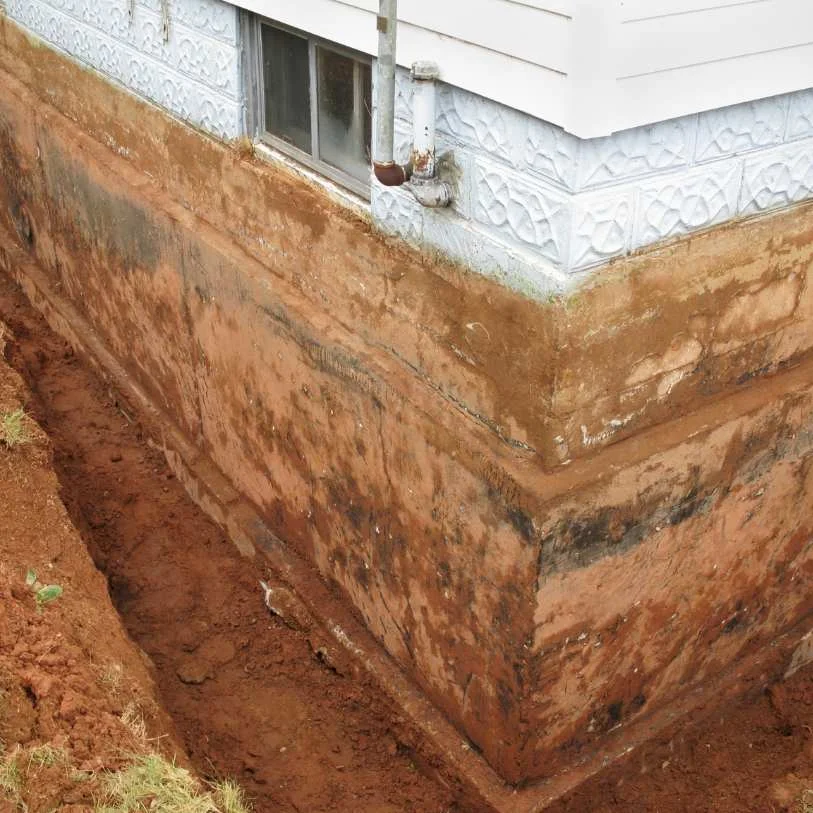
New Braunfels sits at the intersection of the Edwards Plateau and Blackland Prairie, two geological formations that create some of the most challenging soil conditions for foundations anywhere in Texas. The clay soils in this region expand dramatically when they absorb moisture and shrink just as aggressively during drought. That seasonal cycle puts constant pressure on residential foundations across Comal County. Comal Foundation Repair provides free foundation inspections and honest assessments for homeowners throughout New Braunfels and the surrounding area. If your foundation needs repair, we’ll explain exactly what’s happening, what caused it, and what it takes to fix it, before any work begins.
Foundation Repair Services in New Braunfels
Comal Foundation Repair addresses the full range of foundation problems that affect homes in the New Braunfels area. The specific repair approach depends on your foundation type, the severity of the damage, and the underlying cause, which is why every project starts with a thorough inspection rather than a one size-fits-all quote.
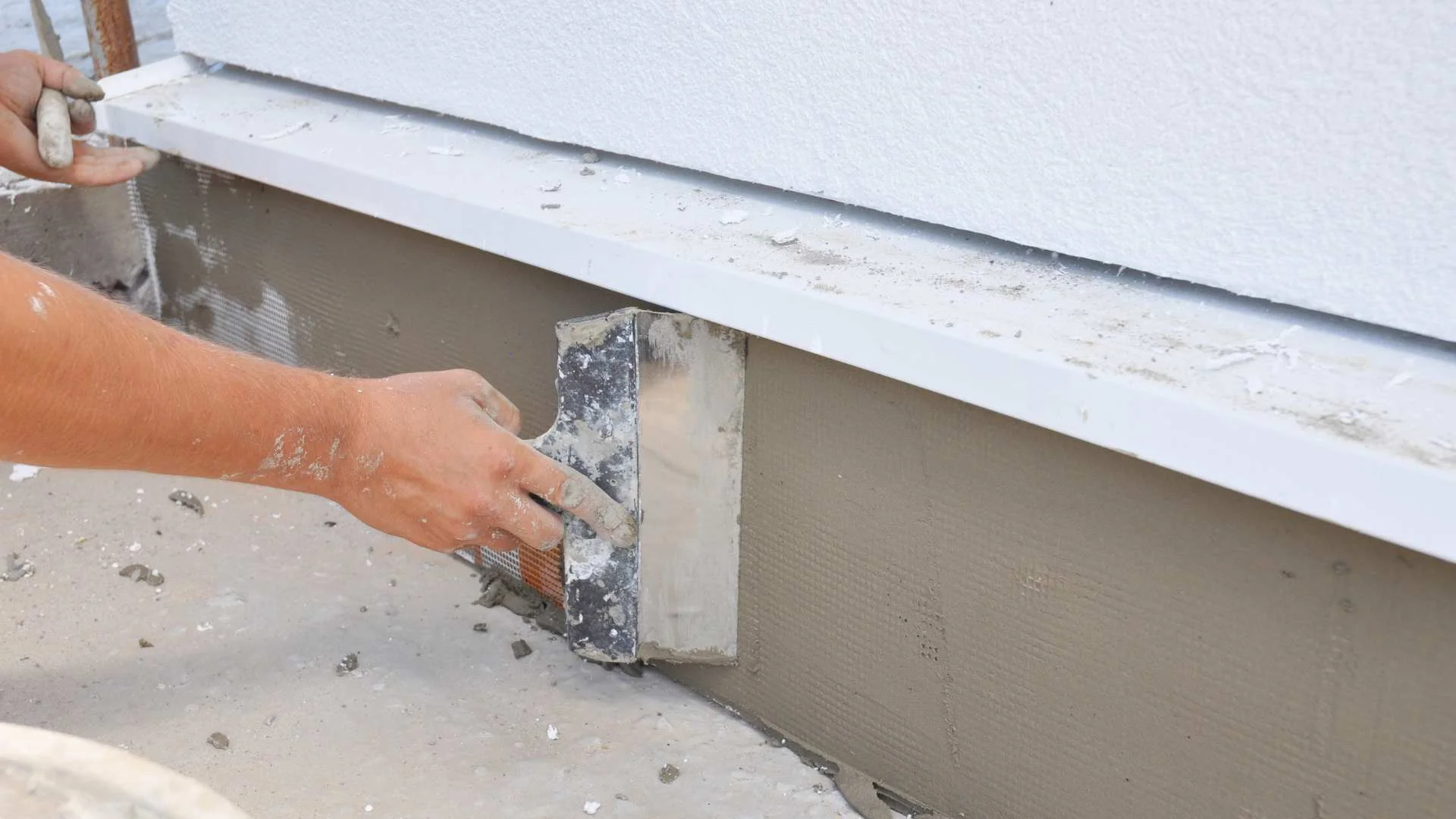
Slab foundation repair is the most common service in this area. The majority of New Braunfels homes are built on concrete slab foundations, and the expansive clay soils in Comal County make these slabs particularly vulnerable to settling, cracking, and heaving. Repair typically involves installing steel piers or pressed concrete piers driven down to stable soil beneath the active clay layer, permanently stabilizing the slab.
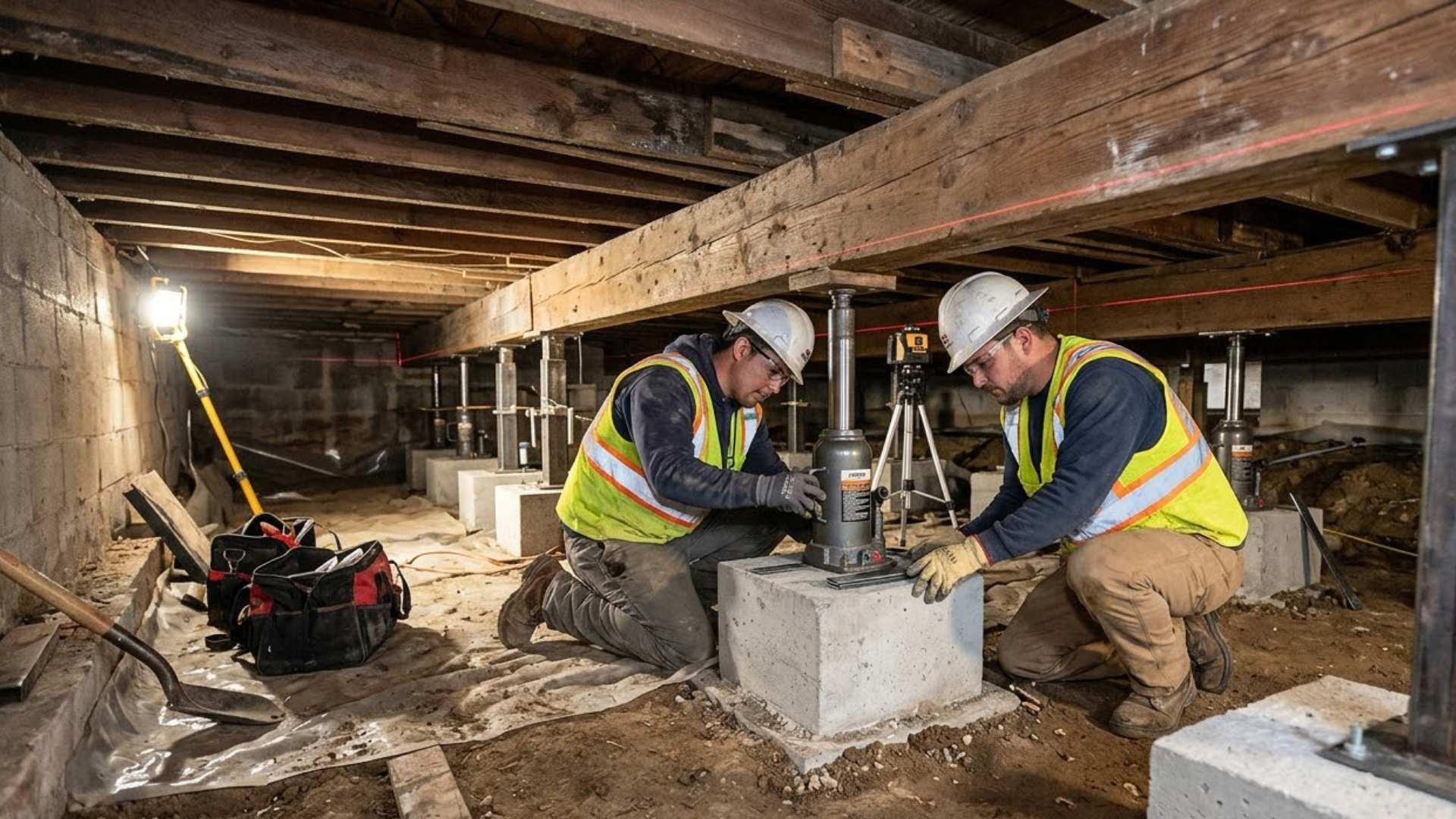
Pier and beam foundation repair addresses the structural systems found in many of the older homes near downtown New Braunfels, the Gruene area, and throughout the historic neighborhoods. These foundations can develop problems when wooden beams deteriorate, support piers shift, or moisture accumulates in the crawl space. Repair involves shimming, reinforcing, or replacing damaged components.
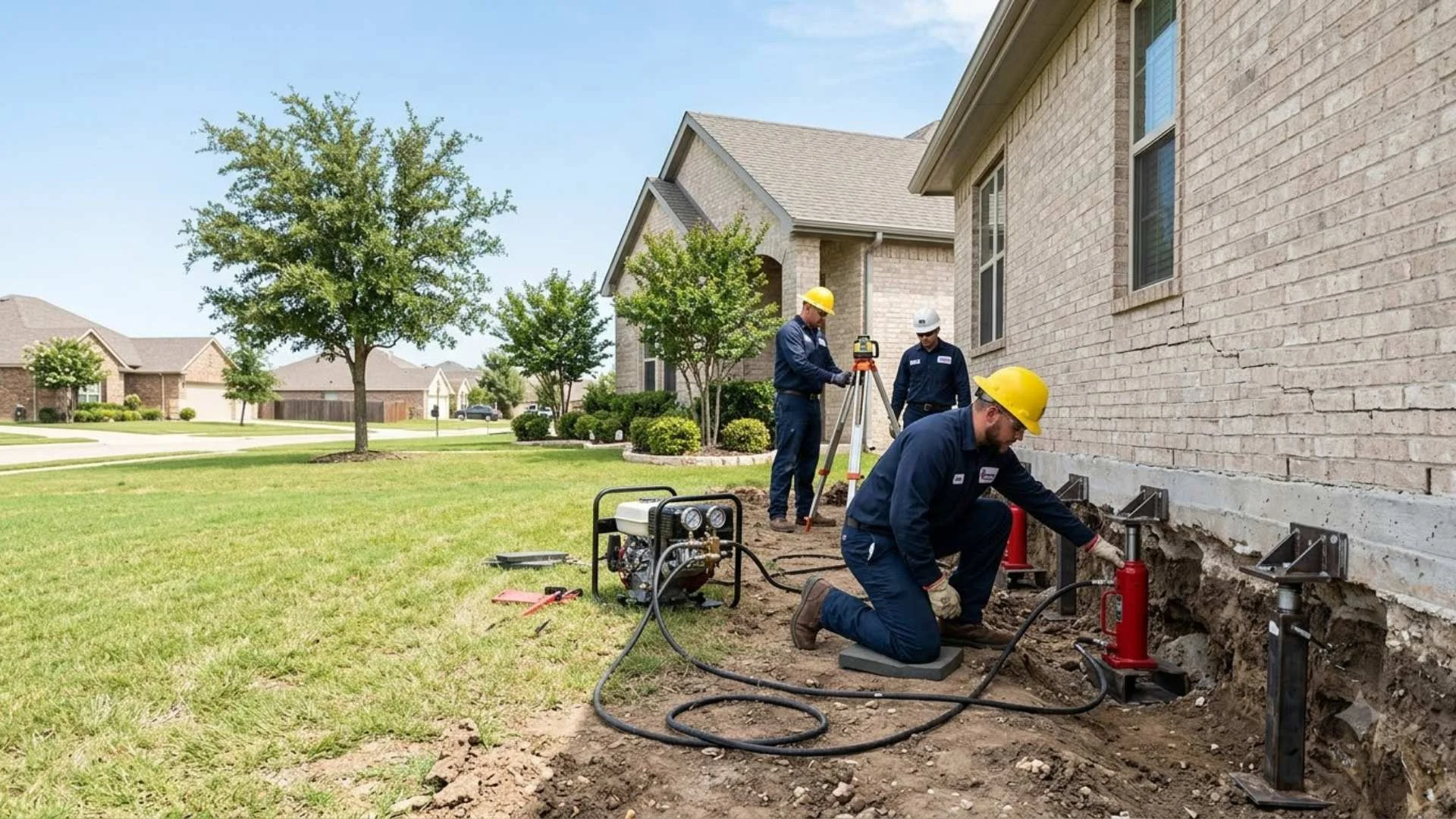
House leveling corrects uneven floors caused by differential settlement, when one part of the foundation sinks more than another. This is especially common in neighborhoods built on the deeper Blackland Prairie clay soils on the eastern side of New Braunfels, where the clay deposits can extend several feet deep and hold significant moisture.
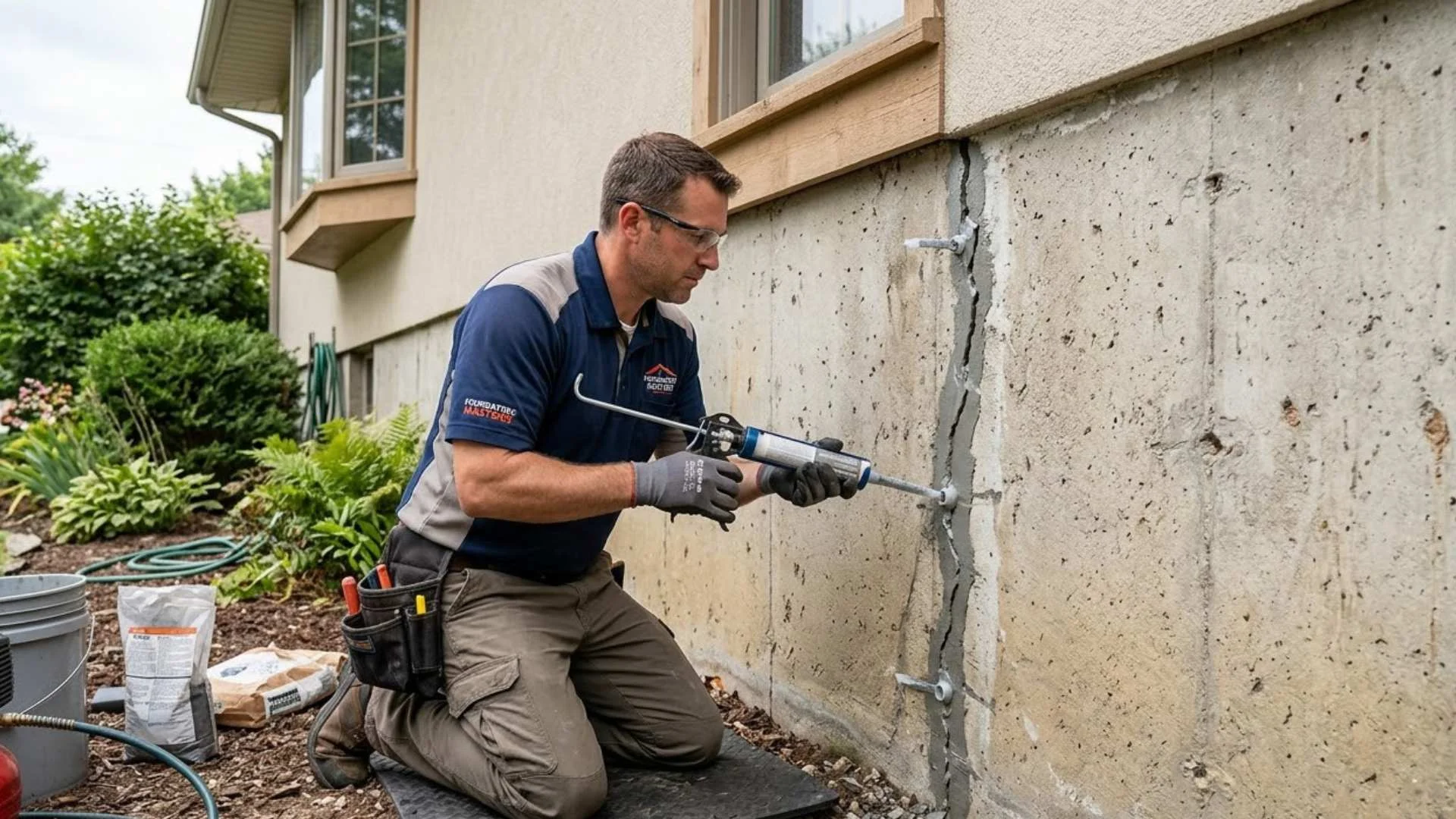
Foundation crack repair targets cracks in walls, floors, and the foundation itself. Not every crack signals a structural emergency, vertical hairline cracks are often cosmetic, but horizontal cracks and stair-step patterns in brick or block walls typically indicate active soil pressure that needs professional intervention.
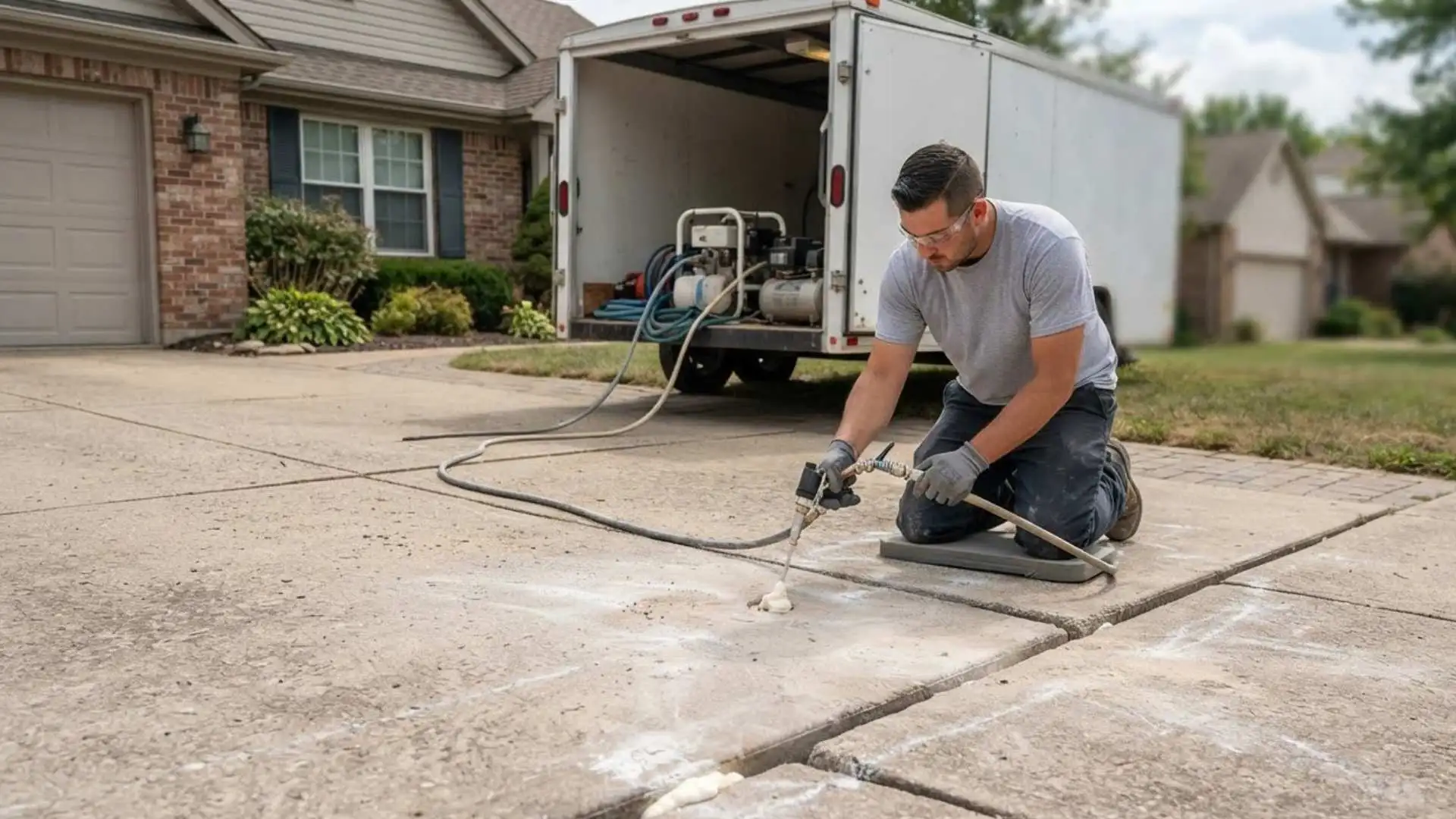
Concrete leveling addresses sunken driveways, sidewalks, patios, and garage floors. Polyurethane foam injection or mudjacking lifts the concrete back to level without full replacement.
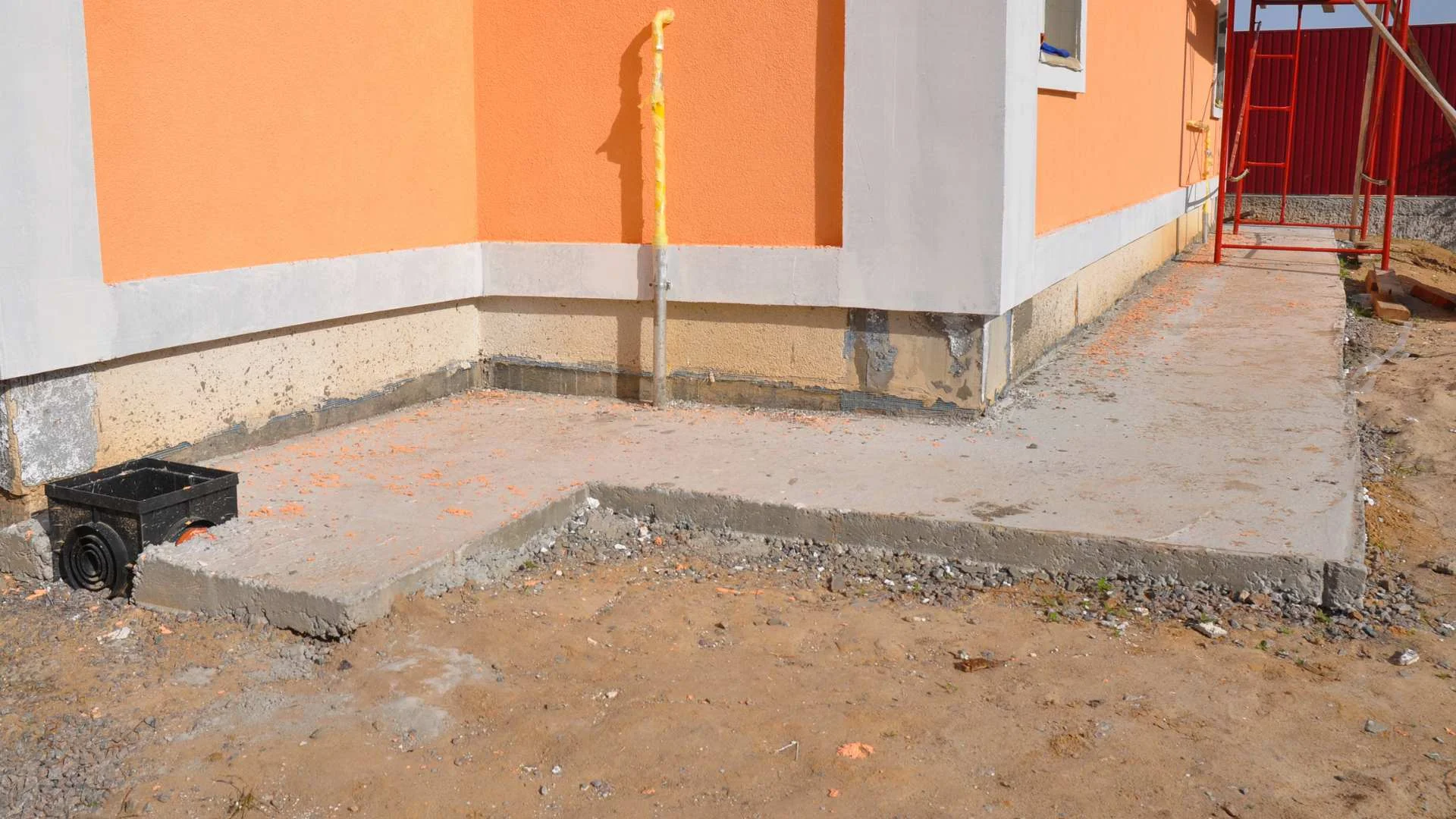
Drainage solutions protect the foundation from future damage. Poor water management is the number one accelerator of foundation problems in this region. French drains, surface grading corrections, and downspout extensions keep moisture balanced around the foundation, preventing the extreme wet-dry soil cycles that cause movement.
How Foundation Repair Works, What to Expect
Understanding the repair process removes the uncertainty that makes foundation problems stressful. Here’s what happens from first call to finished project:
Step 1: Free Foundation Inspection
A structural assessment of your home identifies the type and extent of foundation damage. This includes checking floor levels, measuring cracks, inspecting interior and exterior walls, examining doors and windows for alignment, and evaluating drainage around the property. The inspection results determine whether repair is needed and which method is appropriate.
Step 2: Custom Repair Plan
Based on the inspection findings, a repair plan is developed for your specific situation. This plan specifies the number and placement of piers, the repair method, the expected timeline, and the total cost, all presented in writing before any work begins.
Step 3: Pier Installation and Stabilization
For most slab repairs, steel piers or concrete piers are driven through the unstable clay layer down to load-bearing soil or bedrock. In the western areas of New Braunfels, this often means reaching the limestone formations of the Edwards Plateau. In eastern neighborhoods with deeper clay deposits, piers may need to extend further to reach stable ground.
Step 4: Foundation Lifting and Leveling
Once the piers are in place, hydraulic equipment carefully lifts the foundation back toward its original position. This process is gradual and controlled, over-lifting can cause as much damage as the original settlement. The goal is to restore the foundation to a functional, level position.
Step 5: Final Walkthrough and Warranty
After the repair, a final inspection confirms that the foundation is stabilized and the work meets specifications. Warranty documentation is provided covering the installed piers and the structural work performed.
Why New Braunfels Homes Develop Foundation Problems
New Braunfels has a foundation problem that most cities don’t, and it starts underground. The city sits directly on the boundary between two distinct geological formations. The western portions of New Braunfels, including the higher-elevation neighborhoods near Canyon Lake and along FM 306, are built over the Edwards Plateau. Here, shallow clay soils sit on top of fractured limestone bedrock,
sometimes as little as 12 to 24 inches of soil over rock. This means moisture changes affect the clay rapidly, creating fast expansion and contraction cycles that foundations struggle to handle. The eastern side of the city, including neighborhoods toward Seguin and the lower-elevation areas along I-35, sits on the Blackland Prairie formation. These soils contain deep vertisol clay deposits that can extend several feet below the surface. Blackland Prairie clays hold enormous amounts of water when wet and crack deeply when dry, creating the kind of differential soil movement that causes one side of a foundation to settle while the other side stays in place. Add to this New Braunfels’ climate, hot summers that bake moisture out of the soil, followed by heavy rain events that saturate it rapidly, and the result is a relentless cycle of expansion and contraction that never lets foundations rest. The city’s rapid growth compounds the problem. New subdivisions built on previously undeveloped land, including areas like Veramendi, Voss Farms, and the I-35 growth corridor, are constructed on soil that may not have been adequately tested or prepared for the long-term stresses of residential construction.
Foundation Repair Cost in New Braunfels,
What to Expect
Foundation repair is a significant investment, and cost is typically the first question homeowners ask. Here are realistic price ranges based on the type of work involved:
| Repair Type | Typical Cost Range |
|---|---|
| Foundation crack repair (epoxy/foam injection) | $250 – $800 |
| Minor settlement repair (3–5 piers) | $2,000 – $4,000 |
| Standard slab repair (6–10 piers) | $4,000 – $8,000 |
| Major foundation repair (10+ piers, full perimeter) | $8,000 – $15,000+ |
| House leveling | $4,000 – $8,000 |
| Drainage correction | $2,000 – $7,000 |
Several factors affect where your project falls in these ranges: the number of piers required, the depth piers need to reach (which varies across New Braunfels depending on soil and bedrock depth), the foundation type (slab vs. pier and beam), accessibility of the work area, and whether additional services like plumbing inspection or drainage correction are needed. A free inspection is the only reliable way to get an accurate estimate for your specific situation. General price ranges are useful for budgeting, but every foundation is different.
Neighborhoods We Serve in New Braunfels
Comal Foundation Repair serves homeowners across all of New Braunfels and surrounding Comal County communities. Foundation challenges vary by neighborhood based on soil conditions, construction era, and elevation:
Vintage Oaks and the FM 306 corridor, These Hill Country acreage communities are built on Edwards Plateau geology with shallow clay over limestone. Foundation issues here tend to involve rapid moisture cycling in the thin soil layer above bedrock.
River Chase and Gruene area, River-adjacent properties face additional foundation stress from fluctuating water tables and proximity to the Guadalupe River floodplain. Older homes in the Gruene historic district often have pier and beam foundations that need periodic maintenance.
Oak Run and established neighborhoods, Mature neighborhoods near Loop 337 with homes built in the 1980s– 2000s. These foundations have had decades of exposure to soil movement and may show cumulative settlement.
Veramendi, Voss Farms, and I-35 corridor, Newer master planned communities built on previously undeveloped land. While the homes are newer, the underlying soil conditions are the same expansive clay that affects the rest of the region.
Copper Ridge and Rockwell Ranch, Gated Hill Country communities on larger lots. Higher elevations with more limestone exposure. Foundation issues here often relate to inadequate drainage on sloped lots.
Havenwood at Hunters Crossing, Highland Grove, and Pecan Crossing, Family-oriented subdivisions with standard slab construction. Typical foundation challenges for the region.
Signs You Need Foundation Repair
Not every crack is a crisis, but some warning signs should not be ignored. If you notice any of the following in your New Braunfels home, schedule a free inspection:
- Cracks in interior walls, especially diagonal cracks near door frames, window corners, or where walls meet ceilings. Horizontal cracks are more serious than vertical ones.
- Doors or windows that stick, jam, or won’t latch, foundation movement shifts the frame, pulling doors and windows out of square.
- Uneven or sloping floors, place a ball on the floor. If it rolls consistently in one direction, your foundation may be settling unevenly.
- Gaps between walls and ceiling or walls and floor, visible separation indicates the structure is moving.
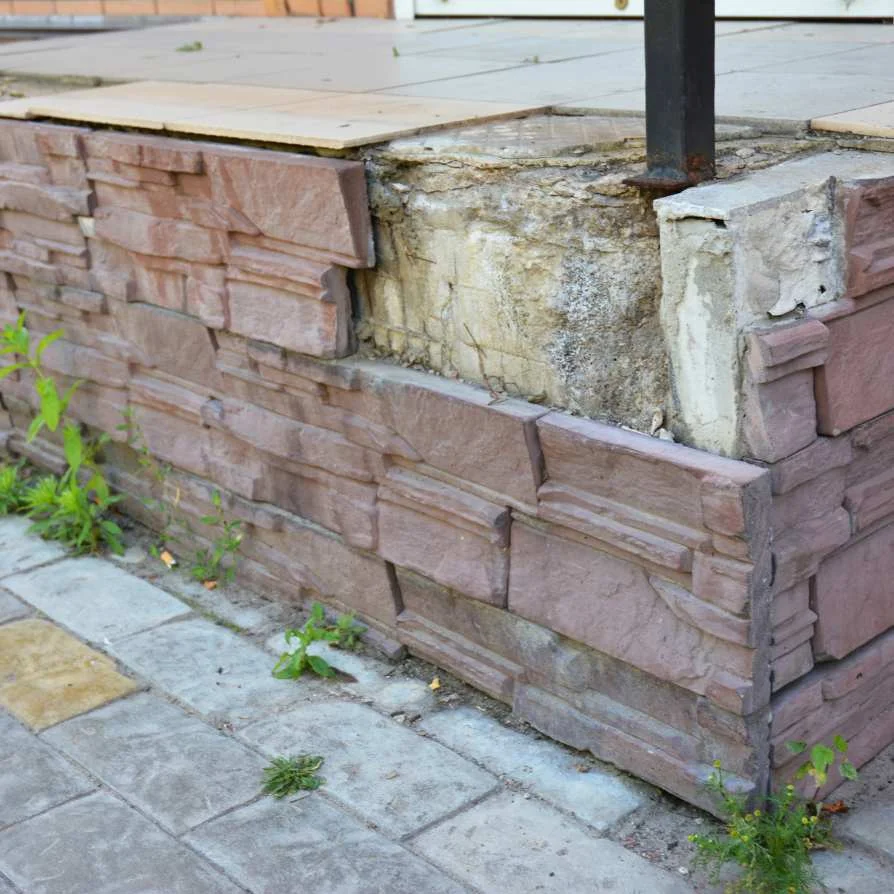
- Cracks in exterior brick or stone, stair-step cracks along mortar joints are a classic sign of foundation settlement. •
- Cracks in the foundation itself, visible cracks in the exposed slab edge or in the crawl space foundation walls.
- Gaps between the soil and foundation, during dry periods, look at the perimeter of your home. If there’s a visible gap where the soil has pulled away from the foundation, the clay is shrinking, and your foundation is losing support.
That last sign is particularly common in New Braunfels during summer drought conditions. The expansive clay soils can shrink enough to leave a 1-2 inch gap around the entire foundation perimeter.
Frequently Asked Questions
How much does foundation repair cost in New Braunfels?
Most residential foundation repairs in the New Braunfels area range from $2,000 to $8,000, depending on the number of piers needed and the severity of the damage. Smaller jobs like crack injection can cost as little as $250, while large-scale repairs involving full-perimeter pier installation can exceed $15,000. A free inspection is the only way to get an accurate quote for your specific situation.
How long does foundation repair take?
Most standard slab repairs are completed in 1-3 days. More extensive projects involving a large number of piers or pier and beam reconstruction may take 3-5 days. Weather can affect the timeline, particularly during New Braunfels’ heavy rain events, which can make soil conditions too unstable for pier driving.
Do I need a foundation repair if I see cracks in my walls?
Not always. Vertical hairline cracks, especially in newer homes during the first few years of settling, are often cosmetic and don’t indicate structural damage. However, horizontal cracks, stair-step cracks in brick walls, and cracks wider than 1/4 inch should be evaluated by a professional. A free inspection can determine whether the cracks are cosmetic or structural.
Does homeowners insurance cover foundation repair in Texas?
In most cases, standard homeowners insurance in Texas does not cover foundation repair caused by natural soil movement, settling, or normal wear. However, if foundation damage results from a covered event, such as plumbing leaks or sudden events like a vehicle impact, your policy may cover part or all of the repair. Check with your insurance provider for your specific coverage.
How does New Braunfels soil affect my foundation?
New Braunfels sits over two geological formations, the Edwards Plateau and Blackland Prairie, that contain highly expansive clay soils. These clays swell when they absorb moisture and shrink during drought, creating a constant cycle of expansion and contraction that puts stress on residential foundations. The severity varies by neighborhood depending on soil depth and composition.
Can foundation problems get worse if I wait?
Yes. Foundation issues are progressive, they don’t stabilize on their own. A crack that’s cosmetic today can become structural within a few years as soil movement continues. The longer the damage goes unaddressed, the more piers are typically needed and the higher the repair cost. Early intervention almost always reduces the total expense.
What is the best foundation repair method?
There is no single “best” method, the right repair depends on your foundation type, soil conditions, and the nature of the damage. Steel piers are generally the most durable solution for slab foundations on expansive clay. Pressed concrete piers are a more affordable alternative for less severe settlement. Pier and beam repairs depend on the specific components that have failed. A proper inspection determines the right method for your situation.
Do you offer free foundation inspections?
Yes. Every project starts with a free, no-obligation foundation inspection. The inspection assesses floor levels, crack patterns, drainage conditions, and overall structural integrity. You’ll receive a clear explanation of the findings and a written repair plan with pricing before any work begins.
Get a Free Foundation Estimate in New Braunfels
If you’ve noticed signs of foundation damage, or you just want peace of mind, schedule a free inspection. There’s no obligation, no pressure, and no cost to find out exactly where your foundation stands. Comal Foundation Repair serves all of New Braunfels and surrounding communities including San Marcos, Seguin, Schertz, Canyon Lake, Kyle, and Wimberley.